“Language is power, in ways more literal than most people think. When we speak, we exercise the power of language to transform reality. Why don't more of us realize the connection between language and power?” – Julia Penelope (American linguist, author, and philosopher)
If the last few years have taught us one thing, it is that all our fates are linked. From the climate crisis, to global pandemics, wars, and racism – it is evident that collective problems require collective solutions. Communicating in a way that builds bridges and breaks barriers resonates with more audiences and is key to laying the groundwork for collective solutions. Simply put, words matter. Language is powerful. It can enhance our empathy, clarity, and understanding of each other as complex individuals with intersectional and varied identities and experiences. However, when language ignores issues of power and equity that shape people’s lives, it only foments further exclusion of marginalized people. It is more important than ever to use language that creates inclusive and equitable cultures.
Inclusive language is more than just avoiding the use of a few antiquated or offensive terms and phrases. It is about embracing communication that acknowledges the power differentials and dynamics of our society and their deleterious effects. It is about showing appreciation for the diversity everyone brings to the table. And finally, it is about creating cultures where people can feel free to be their full authentic selves.
This type of communication is needed more than ever to adapt to a rapidly diversifying nation and world. In the United States, Generation Z is on track to become the most diverse generation in history. Nearly half (48%) identify as people of coloropens in new window and over one in five (20.8%) identify as LGBTQ+opens in new window. On a global scale, the world’s population is projected to reach 8 billion by November 2022opens in new window , each with their own unique identities that are influenced by factors such as age, disability, gender, race, ethnicity, culture, nationality, sexual orientation, and socioeconomic status.
In December 2021, APA released the first edition of its Inclusive Language Guidelines to raise awareness, guide learning, and support the use of culturally sensitive terms and phrases that center the voices and perspectives of those who are often marginalized or stereotyped. It includes guidance for people working to foster equity, diversity, and inclusion in the settings in which they learn, live, and work.
The guidelines are grounded in psychological science and designed to be iterative given the dynamic and ever-evolving nature of language. They provide direction not only for research articles and formal writing but also for verbal communication, due to the significance of building relationships in day-to-day exchanges.
Within the guidelines, you will find:
- definitions related to issues of power and equity that cut across various social identities
- explanations of the differences between person-first and identity-first language with numerous examples
- identity-related terms that cover age; disability status; race, ethnicity, and culture; sexual orientation and gender diversity; and socioeconomic status
- guidance for how to avoid cultural appropriation, pejorative language, and casually offensive language in conversation.
Inclusive communication can be awkward and uncomfortable for even the most well-intentioned person. Many people feel inadequately prepared or lack confidence in their abilities. Others fear they may cause unintended offense or, even worse, appear performative in their efforts. These are all natural and understandable emotions to have.
Here are three tips to use as you build your inclusive communication skills.
Focus on people over labels
Putting people into boxes is reductive, dehumanizing, and harmful. Listen carefully to the ways in which different groups identify themselves and reflect those choices when in communication with them. For example, various groups differ on whether they prefer person-first or identity-first language. They all have their own unique and valid reasons that reflect their experiences and it is best to do your research rather than taking a one-size-fits-all approach.
Show cultural humility
Embrace that you are a learner, not an expert, when it comes to understanding the experiences of other people, their cultures, and their experiences – especially if they are from a marginalized group. This requires challenging some of your own biases, continual self-reflection, and knowing that you may mistakes but should remain open to continual learning and growth.
When you make a mistake, think impact over intention
Everyone makes mistakes – we are human. When you learn you have caused someone harm with your words, decenter yourself and focus not on what your intentions were, but on the impact on that person or group. Listen carefully to understand how it affected them, give a genuine apology, and commit to doing better.
References
American Psychological Association. (2021). Inclusive language guidelines. https://www.apa.org/about/apa/equity-diversity-inclusion/language-guidelines
Fry, R., & Parker, K. (2018, November 15). Early benchmarks show ‘post-millennials’ on track to be most diverse, best-educated generation yet. Pew Research Center. https://www.pewresearch.org/social-trends/2018/11/15/early-benchmarks-show-post-millennials-on-track-to-be-most-diverse-best-educated-generation-yet/opens in new window
Jones, J. M. (2022, February 17). LGBT identification in U.S. ticks up to 7.1%. Gallup https://news.gallup.com/poll/389792/lgbt-identification-ticks-up.aspxopens in new window
United Nations Department of Economic and Social Affairs, Population Division (2022). World Population Prospects 2022: Summary of Results. UN DESA/POP/2022/TR/NO. 3. https://www.un.org/development/desa/pd/sites/www.un.org.development.desa.pd/files/wpp2022_summary_of_results.pdfopens in new window
About the author
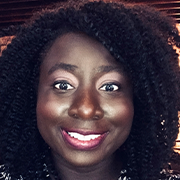 Efua Andoh is a public engagement manager on the APA Communications team. She has a bachelor’s degree in anthropology from the University of Pennsylvania and a certificate in strategic communications from George Washington University. Prior to her current role, Efua managed communications and outreach for APA’s Public Interest directorate. More recently, Efua has been involved in much of APA’s equity, diversity, and inclusion-related communications including the development and rollout of the APA’s Inclusive Language Guidelines and Equity, Diversity, and Inclusion Framework. She also manages a number of strategic communications partnerships between APA and other organizations.